
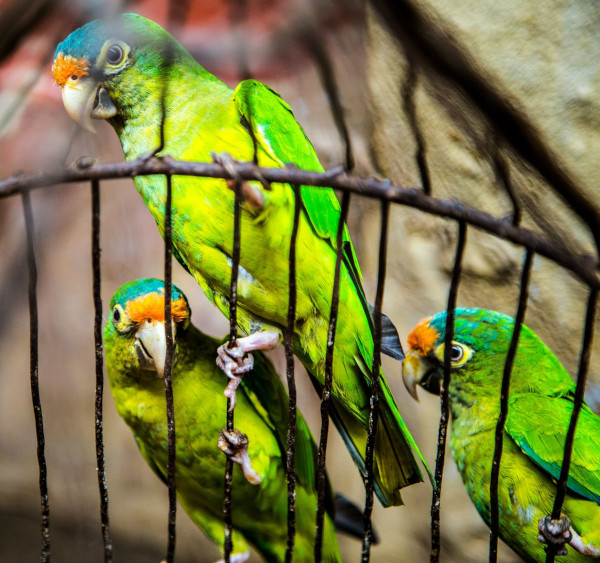
 Amazon parrots (Amazona spp.) are among the most popular pet birds due to their intelligence, vibrant colors, and exceptional talking ability. Native to the Americas, these medium-sized parrots have bold personalities, making them both entertaining and demanding companions.
Physical Characteristics
Size: 10–18 inches (25–45 cm) depending on the species.
Weight: 250–600 grams.
Lifespan: 30–60 years (with proper care).
Colors: Mostly green plumage, with striking yellow, blue, red, or orange accents on the head, wings, or tail.
Beak & Feet: Strong, hooked beak for cracking nuts; zygodactyl feet (two toes forward, two backward).
Popular Amazon Parrot Species
Yellow-naped Amazon (Amazona auropalliata) – Best talker, highly social.
Blue-fronted Amazon (Amazona aestiva) – Playful, adaptable.
Double Yellow-headed Amazon (Amazona oratrix) – Excellent mimic, affectionate.
Lilac-crowned Amazon (Amazona finschi) – Quieter, good for beginners.
Orange-winged Amazon (Amazona amazonica) – Gentle, less noisy.
Behavior & Personality
Highly intelligent – Can learn words, songs, and tricks.
Social & affectionate – Bonds strongly with owners (may become jealous).
Vocal – Loud calls, especially at dawn/dusk (“morning scream”).
Playful – Needs toys, puzzles, and interaction to prevent boredom.
Habitat & Natural Range
Found in Central & South America, Mexico, and the Caribbean.
Prefers forests, savannas, and palm groves.
Some species (e.g., Puerto Rican Amazon) are critically endangered.
Diet & Nutrition
In the Wild:
Fruits, nuts, seeds, berries, and blossoms.
In Captivity:
High-quality pellets (60–70% of diet).
Fresh fruits & veggies (apples, carrots, leafy greens).
Nuts & seeds (in moderation – high in fat).
Avoid: Avocado, chocolate, caffeine, alcohol.
Care & Housing Requirements
Cage Size: Minimum 24″x36″x48″ (larger is better).
Perches & Toys: Wooden branches, chewable toys, foraging puzzles.
Social Needs: At least 3–4 hours of daily interaction.
Bathing: Loves showers/misting (helps feather health).
Speech & Sound Mimicry
Excellent talkers (some learn 100+ words and phrases).
Clear voices, often mimicking tone and inflection.
Sing songs, whistle, and even laugh like their owners.
Common Health Issues
Obesity (from poor diet/lack of exercise).
Feather plucking (due to stress/boredom).
Psittacosis (a bacterial infection).
Beak & feather disease (viral, requires vet care).
Conservation Status
Some species (e.g., Puerto Rican Amazon) are critically endangered.
Habitat loss & illegal pet trade are major threats.
CITES-listed – Many Amazons require permits for ownership.
Is an Amazon Parrot Right for You?
✔ Best for: Experienced bird owners who can provide time, attention, and mental stimulation.
❌ Not ideal for: Those who prefer a quiet pet or cannot commit to decades of care.