
 Introduction
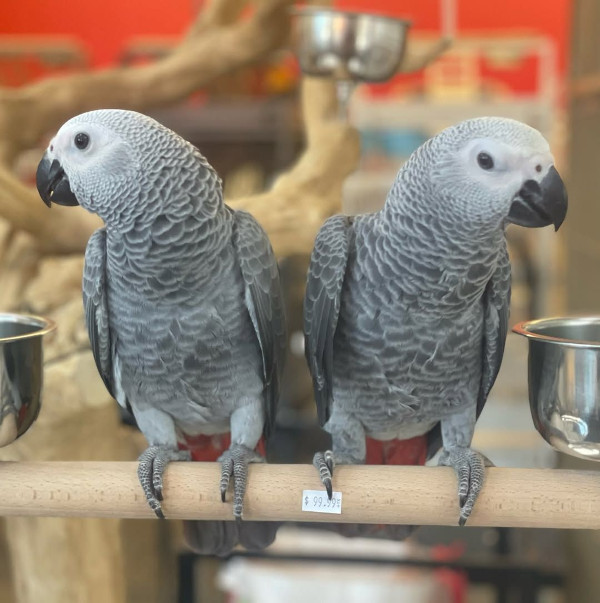
The African Grey Parrot (Psittacus erithacus) is widely regarded as the most intelligent bird species, famous for its exceptional cognitive abilities, remarkable speech mimicry, and emotional sensitivity. Native to the rainforests of West and Central Africa, these medium-sized parrots have captivated humans for centuries with their human-like intelligence and ability to understand context.
Physical Characteristics
Size: 12–14 inches (30–36 cm) long.
Weight: 400–650 grams.
Lifespan: 40–60 years (some live beyond 70 with proper care).
Colors:
Congo African Grey: Light gray body, bright red tail, black beak.
Timneh African Grey: Darker charcoal gray, maroon tail, horn-colored upper beak.
Distinctive Features:
White mask around the eyes.
Highly dexterous feet (can manipulate objects like hands).
Behavior & Personality
Extremely Intelligent – Comparable to a 5-year-old child in problem-solving.
Exceptional Talkers – Can learn hundreds of words and use them contextually.
Emotionally Complex – Forms deep bonds; prone to stress and boredom.
Observant & Curious – Notices routines and mimics household sounds (phones, microwaves).
Sensitive – Needs a stable environment (may pluck feathers if neglected).
Habitat & Natural Range
Found in dense rainforests, mangroves, and savannas of:
Congo Basin (Congo African Grey).
West Africa (Timneh African Grey).
Threats:
Deforestation & illegal pet trade (CITES Appendix I – endangered in some regions).
Diet & Nutrition
In the Wild:
Palm nuts, fruits, seeds, and leafy greens.
In Captivity:
High-quality pellets (60% of diet).
Fresh vegetables (kale, carrots, sweet potatoes).
Fruits (berries, apples, pomegranate – in moderation).
Healthy fats (nuts, seeds – sparingly to prevent obesity).
Calcium-rich foods (essential for African Greys).
Avoid: Chocolate, avocado, caffeine, salty foods.
Care & Housing Requirements
Cage Size: Minimum 36″x24″x48″ (larger is better).
Toys & Enrichment:
Puzzle toys (they love challenges).
Foraging toys (stimulates natural behavior).
Wooden chewables (prevents boredom).
Social Needs:
3–4 hours of daily interaction.
Thrives with mental stimulation (training, talking sessions).
Bathing: Enjoys misting or shallow water baths.
Speech & Cognitive Abilities
Unmatched Mimicry:
Can imitate voices, sounds, and accents perfectly.
Understands context (e.g., says “good morning” only in the morning).
Problem-Solving Skills:
Can count, identify shapes, and understand concepts like “same vs. different.”
Famous African Greys:
Alex (studied by Dr. Irene Pepperberg) knew 150+ words and understood abstract concepts.
Common Health Issues
Feather Plucking (stress, boredom, or nutritional deficiency).
Calcium Deficiency (leads to seizures – common in Greys).
Psittacine Beak & Feather Disease (PBFD).
Respiratory Infections (sensitive to air quality).
Prevention:
Annual vet checkups.
Balanced diet + calcium supplements.
Clean, humidified air.
Conservation Status
Congo African Grey: Endangered (IUCN) due to habitat loss & trapping.
Timneh African Grey: Vulnerable.
CITES Appendix I (strict trade regulations).
Is an African Grey Right for You?
✔ Best For: Experienced bird owners who can provide daily mental stimulation, social interaction, and long-term care.
❌ Not Ideal For: Beginners or those who want a low-maintenance pet.
Fun Fact:
African Greys can recognize themselves in mirrors, a trait shared only with a few intelligent animals like dolphins and great apes!
Need details on training, adoption, or comparison with other parrots? Ask below!
African Grey Parrot: The Genius of the Avian World
Overview
The African Grey Parrot (Psittacus erithacus) is universally acclaimed as the most intelligent bird species, renowned for its:
Unparalleled cognitive abilities
Exceptional speech mimicry
Emotional depth comparable to young children
These medium-sized parrots originate from the rainforests of West and Central Africa and have fascinated humans for centuries with their remarkable intelligence.
Key Features
Physical Characteristics
Size: 12-14 inches (30-36 cm)
Weight: 400-650 grams
Lifespan: 40-60 years (can exceed 70 with proper care)
Varieties:
Congo African Grey: Light gray with bright red tail
Timneh African Grey: Darker gray with maroon tail
Distinct Traits:
White facial mask
Extraordinarily dexterous feet
Cognitive Abilities
Problem-solving skills equivalent to a 5-year-old child
Vocabulary of hundreds of words used contextually
Ability to understand abstract concepts
Famous example: Alex the parrot demonstrated counting and color identification
Care Requirements
Housing
Minimum cage size: 36″x24″x48″
Essential accessories:
Puzzle toys
Foraging devices
Various perches
Requires 3-4 hours of daily interaction
Diet
Foundation: High-quality pellets
Supplement with:
Fresh vegetables (kale, carrots)
Fruits (berries, apples)
Limited nuts/seeds
Critical: Calcium supplementation
Behavioral Considerations
Highly sensitive emotionally
Prone to feather plucking if stressed
Needs constant mental stimulation
Forms extremely strong bonds
Conservation Status
Congo African Grey: Endangered
Timneh African Grey: Vulnerable
CITES Appendix I listed
Major threats: Habitat loss and illegal trade