
 Introduction
The Eclectus Parrot (Eclectus roratus) is one of the most striking and sexually dimorphic parrot species, meaning males and females look dramatically different. Native to the South Pacific, including Australia, Indonesia, and the Solomon Islands, these parrots are known for their calm demeanor, intelligence, and vivid plumage.
Physical Characteristics
Size & Appearance:
-
Length: 17–20 inches (43–50 cm).
-
Weight: 13–19 oz (375–550 g).
-
Lifespan: 30–50 years (some live up to 60 in captivity).
-
Sexual Dimorphism:
-
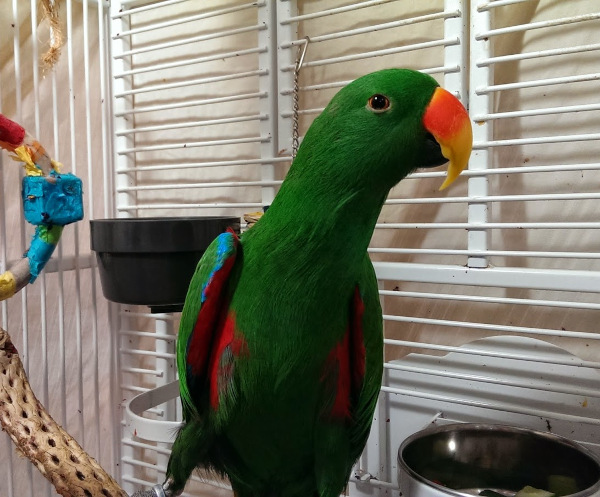
Males: Bright emerald green with red and blue wing markings and an orange beak.
-
Females: Deep red or purple/blue with a black beak and violet belly.
-
Unique Features:
-
Smooth, sleek feathers (almost velvety texture).
-
Short, square tail (unlike most parrots).
-
Distinctive eye rings (bare skin around the eyes).
Behavior & Personality
-
Gentle & Calm – Less noisy than Amazons or Macaws.
-
Highly Intelligent – Can learn words, sounds, and tricks.
-
Social but Independent – Enjoys interaction but doesn’t demand constant attention.
-
Moderate Talkers – Clear speech, though not as vocal as African Greys.
-
Chewers – Needs wooden toys to prevent boredom.
Habitat & Natural Range
-
Found in rainforests, coconut plantations, and dense woodlands.
-
Native to:
-
Solomon Islands
-
New Guinea
-
Northeastern Australia
-
Moluccas (Indonesia)
-
Diet & Nutrition
In the Wild:
-
Primarily frugivorous (fruit-based diet) – figs, pomegranates, papaya.
-
Also eats flowers, seeds, and leaf buds.
In Captivity:
-
Fresh fruits & veggies (50–60% of diet) – mango, berries, sweet potato.
-
High-fiber pellets (30%).
-
Sprouted seeds & nuts (10–20%).
-
Avoid: High-fat seeds (sunflower), avocado, chocolate.
Special Note: Eclectus parrots have a long digestive tract and need a low-fat, high-fiber diet to prevent obesity and fatty liver disease.
Care & Housing Requirements
-
Cage Size: Minimum 36″x24″x48″ (larger preferred).
-
Perches: Natural wood branches of varying thickness.
-
Toys: Foraging puzzles, chewable wood, and shreddable materials.
-
Bathing: Loves daily misting or shallow water dishes.
-
Social Needs: At least 2–3 hours of out-of-cage time daily.
Speech & Sound Mimicry
-
Clear, articulate speech (can learn phrases and songs).
-
Softer voice compared to other parrots.
-
Mimics household sounds (phones, doorbells).
Common Health Issues with The Electus Parrot
-
Feather Plucking (stress-related).
-
Obesity & Fatty Liver Disease (due to improper diet).
-
Psittacine Beak and Feather Disease (PBFD).
-
Vitamin A Deficiency (if fed seed-only diets).
Preventive Care:
-
Annual avian vet checkups.
-
Balanced diet with fresh greens and vitamin supplements.
Conservation Status
-
Least Concern (IUCN), but some subspecies are threatened.
-
Habitat loss and pet trade impact wild populations.
-
CITES Appendix II (regulated international trade).